
The Beginning · What Is the Dao?
In Daoist philosophy, there is a simple idea: follow the way of nature.
The seasons turn. Nature rises and rests. To live in harmony with this rhythm means knowing when to move forward, when to slow down — and when to return to stillness.
Winter carries a different kind of wisdom. As the days grow shorter and the energy of the earth settles, traditional Chinese wisdom does not ask us to push harder. It invites us to rest more, conserve our energy, and protect what we have cultivated throughout the year. This is the principle of Dong Cang (冬藏) — winter storage, winter nourishment.


Practice
Stillness
Inner Calm
For seven days in Wudang Mountain — a UNESCO World Heritage site and the spiritual home of Daoism for over a thousand years — we practice living the way winter asks us to: slowly, quietly, and with intention.
The complete day-by-day rhythm of the retreat is included in our handbook.
① Learn From a 30th-Generation Daoist Master
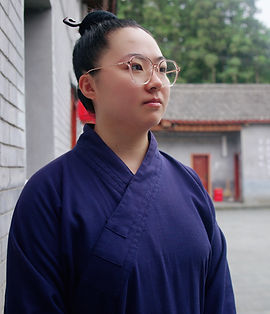
Your teacher is Master Xing Tong — a 30th-generation disciple of the Longmen lineage of Quanzhen Daoism at Wudang, trained under Master Faxian in Daoist cultivation and martial arts.
A National Level II Social Sports Instructor, her practice spans Yi Jing divination, Wudang health cultivation, Tai Chi, Miao Dao, and Wudang swordsmanship. Her teaching carries one simple principle: cultivating virtue through practice — what you learn on the mountain is designed to come home with you.
② A Complete Practice: Tai Chi, Sword & Stillness
Each morning begins before the crowds, as the first light reaches the mountain. Over seven days you will build a complete personal practice — not by watching, but by doing: Wudang Tai Chi, slow and circular, teaching you to work with your energy; the traditional light-sword practice, where awareness and breath matter more than force; Ba Duan Jin and standing meditation to gather and conserve your Qi; and silent forest walking meditation through ancient woodland. No prior experience needed — winter practice asks for conservation, not intensity.


③ Winter Nourishment: Food, Healing & Seasonal Wisdom
This retreat is built around Dong Cang — the Daoist art of winter nourishment, experienced in every part of the day: seasonal Daoist cuisine rooted in winter principles, using local mountain herbs such as Huang Jing and Chinese yam; a personal Daoist medicine consultation with practical guidance you can continue at home; traditional bodywork and warming moxibustion; and a hands-on herbal sachet workshop — blend your own Wudang herbs to carry the retreat home with you.


④ Sacred Wudang: Temples, Ancient Paths & the Golden Summit
Wudang Mountain is not a backdrop — it is the teaching itself. Walk the ancient sacred paths with your master and hear the stories of this thousand-year landscape. Explore the Ming-dynasty halls and courtyards of Taizipo. Ride to the Golden Summit, where Taihe Palace and the Golden Hall sit above a sea of peaks. And one evening, let traditional guqin music by the fireside settle your mind — the ancient theory of the Five Tones, played live.


Dates & Pricing
December 3–9, 2026 · 7 days · 6 nights · Wudang Mountain, China
Group size
Max 12 guests
Level
All levels — no experience required
Language
English & Mandarin, bilingual hosts
What's Included / Not Included
Included
✓ 6 nights mountain accommodation
✓ Station pickup & departure transfer
✓ Daily guided practice (Tai Chi, sword, Ba Duan Jin, standing meditation)
✓ All cultural sessions & workshops (guqin, Yi Jing, herbal sachet)
✓ Daoist medicine consultation + bodywork & moxibustion
✓ Daily seasonal meals
✓ Golden Summit cable car & entrance tickets
✓ Bilingual hosts throughout
Not Included
✗ International flights / train to Wudang
✗ Travel insurance (required) · China visa fee
✗ Personal expenses & optional gratuities
FAQ
Q1: I've never practiced Tai Chi or sword. Can I join?
Absolutely — all levels. Winter practice emphasizes conservation over intensity; every session adapts to you.
Q2: What's the weather like in November?
Cool and crisp, typically 5–15°C (41–59°F). Mountain mornings are chilly; a full packing list is in the handbook.
Q3: How demanding is it physically?
Moderate and adjustable. Walks are slow and mindful; the Golden Summit uses a cable car; every activity has rest alternatives.
Q4: What language are sessions in?
Mandarin with professional bilingual interpretation by your Pulse hosts — nothing is lost.
Q5: How do I get there?
Fly to Wuhan (WUH) or Shiyan Wudangshan (WDS), then high-speed rail to Wudangshan Station; our driver picks you up. Full guidance in the handbook.


